Blog

  • 8 Benefits of Design Thinking Workshops

    This article was written as part of the interview process for AJ&Smart.

    (New around here? Check out Workshopper’s Ultimate Beginner’s Guide to Design Thinking!).

    Design Thinking is a creative problem-solving approach that brings new value to customers and organizations, helping us challenge our assumptions and innovate in ways we never thought possible.

    At Workshopper, we have found that Design Thinking workshops can drastically change the way we think about our products, consumers, and even processes. These workshops not only unearth true gem ideas, they help actualize team members, get them on board, and radically improve processes both now and in the future…

    The range of questions we explore in Design Thinking workshops vary wildly – “what do our customers really want?” and “how can we make the recovery process more pleasant for patients?” are just two snappy examples.

    In any case, the solution is roaming free and untamed on some distant, uncharted plain in our imagination. Design Thinking workshops unlock previously untapped creative potential – while keeping the customer and their needs front and center.

    Let’s take a look at 8 unexpected benefits of this often groundbreaking process:

    It challenges our assumptions and help us see things in new ways.

    The very concept of an externally-facilitated workshop adds a new, unclouded lens to the problem. Bringing in a new stakeholder can stimulate fresh discussion and ideas in the group, and as the team explains or justifies their current ways of doing things to an outsider, they may identify holes and room for improvement. This challenging of norms and biases is the crucial first step in design thinking.

    It helps unlock new creativity – in the most structured possible way.

    The stereotype of designers as feckless creatives throwing paint at the wall couldn’t be further from the truth. Design Thinking seeks to lock down the most inspired, energetic parts of the creative process and apply a reliable, rigorous framework to deduce winning ideas. In Design Thinking workshops, you will agree on the key questions and problems ahead of time, and your facilitator will implement exercises to properly explore these -within a time limit. We’ve all had brainstorming meetings which go way off track, dwell far too long on lightweight problems, or speed ahead to an easy solution rather than really getting into the thick of the issue. Design Thinking reframes this process in a replicable way, which guarantees your questions are answered with maximum creativity – in a minimum amount of time.

    It sparks bright new ideas – and ensures the perfect one doesn’t go unsaid.

    “The best way to have a good idea is to have a lot of ideas.” – Linus Pauling

    Most of us have already found that just bouncing your ideas off someone else may inspire an offshoot, redesign, or even a complete change of track. Design Thinking Workshops cultivate this creative spirit and leave no stone unturned in the search for the winning solution. Design Thinking is an inclusive concept which builds itself on the assumption that everyone’s unique perspective and experiences generate one-of-a-kind (and potentially groundbreaking) ideas. Our workshop exercises empower and encourage everyone to get thinking and share their thoughts with the group. The trial and error approach of unlocking and exploring every possible idea before narrowing it down to the clear winners can lead to amazing, unexpected successes. Even terrible ideas teach us something: what is it that we should NOT do?

    For more on ideation techniques, check out Workshopper’s article on Design Thinking Phase 3: Ideation.

    It recenters customers at the heart of our design – and helps us rediscover why we do what we do.

    Paul Rand famously said: “design is so simple. That’s why it’s complicated.”

    When we spend our time working behind the scenes, we may forget the perspective of someone who has never used our product, or may not be aware of the full range of reasons they may need to use it. To help you refocus, Design Thinking workshops begin with a crucial (but simple!) exercise: empathizing with your user, and endeavoring to deliver a more human-centered design. Human-centered approaches – for example having the workshop participants live the customer’s experience and interact naturally with products or services – may help glean these “seemingly obvious” yet pivotal insights. These rethinks dispel assumptions and often spark ideas for future improvements, or entirely new concepts. The Design Thinking process identifies tangible pain points and develops the clear, actionable outputs we need to address them.

    Interested in figuring out what simple solutions you may be missing? Read Workshopper’s Guide to Empathizing with your customer to discover a few exercises like “the 5 Whys” and “Beginner’s Mindset” to get you thinking.

    It leads to a whole host of competitive advantages.

    Executives are well aware that structured creative thinking is the key to unlocking new success – but they may be pleasantly surprised by just how much time, energy and money can be saved thanks to this streamlined process. The obvious benefits of Design Thinking are smarter, more thought-out products which truly address your customers’ needs (or go one step ahead and fulfill a nascent need). The Design Thinking process itself grants further savings in that it reduces time to market and saves a great deal of time on prototyping and development, thanks to its built-in feedback loops and troubleshooting.

    It inspires and empowers new leadership & innovation.

    The Design Thinking process actively involves employees across teams in the Design process and subsequent project – and creates massive buyin. Contributing their own ideas and fleshing out those of their colleagues heightens employees’ level of personal interest and investment in bringing the concept to life. At the end of the project, they can feel truly proud of their work and reflect on the new perspectives and learnings gained from such a hands-on role. This empowering experience instills valuable new skills and may inspire them to innovate and lead ideas in the future.

    It fosters epic co-creation.

    Design Thinking may reshape the way your organization solves problems, and the willingness for co-creation is one of the most welcome effects. Design Thinking puts interdisciplinary experts – and people of all different backgrounds and experiences – in the same room and on the same project. Instead of measuring individual success or focusing on their “own” work, they co-create and pool all ideas to ensure the final result reflects the very best of the group’s collective insights. The tangible result often inspires teams with the knowledge that “together”, they truly can achieve more, and may inspire new collaborative efforts in the future.

    It facilitates enriched communication – now, and in the future.

    An offshoot of this co-creation is improved communication, empathy and dialogue within the organization. This is a positive move toward breaking down silos and providing context between teams. New knowledge, perspectives, and experiences may also help employees gain new adaptability and insight to apply in their everyday role. Product designers with an insight into the development process, developers who understand what users hope to achieve with their product, and marketers who understand the technical ins and outs of the product they are selling, are just some of the many examples. New learning and feedback create an iterative process whereby the firm continually improves.

    Conclusion

    “Design Thinking is a mindset, not a toolkit or a series of steps”

    Design Thinking doesn’t teach just one skill: it’s a whole new way of thinking, and this cultural and systematic change is felt across your entire organization.

    Aside from getting your creative juices flowing, Design Thinking workshops fine-tune your ideation processes and hopefully inspire you to think outside the box in everything you do. Importantly, they empower employees to learn from one another and cooperate in ways they previously hadn’t thought possible. When you begin solving problems with Design Thinking, you never know what could come next – you may even discover a new guiding light or strategic goal to work toward.


  • Coliving Insights: 5 Ways to Add Value for Tenants

    Coliving is on the rise. Around 180,000 people move to Berlin each year (src), and this is likely to increase thanks to the ever-expanding career and study opportunities on offer in the city. With so much competition for apartments, coliving is an increasingly popular option.

    We know coliving is on the rise, even in smaller cities, but we don’t know a lot about coliving tenants. Why do they choose coliving? Why do they leave? And importantly, how could we make them want to stay?

    Let’s run through coliving residents’ 5 most common likes and dislikes, then conclude with 5 tips on how to add some value and diffrentiate in this competitive market space.

    Perceived advantages of coliving

    1. Meet new people

    This one seems like a no-brainer. Almost all participants cited meeting new people and developing friendships in a new city as the main advantage of coliving. Especially for newcomers, the opportunity to join an inbuilt community is a key value-adder.

    Src

    1. Intercultural experiences

    Several participants mentioned interesting cultural exchanges, learning new perspectives, and practicing foreign languages as a positive aspect of coliving. Events which encourage socialising and exchange are a huge benefit. Some participants found a new favorite dish, or became interested in a new sport or hobby thanks to exchange with other tenants.

    1. Borrowing & sharing items

    For young professionals who own few assets, moving to a new city or country with limited suitcase space means dwindling one’s possessions down to the bare essentials. Living with others creates a family-like atmosphere, where residents can borrow, share, or buy items together, dividing the cost and accessing things they otherwise could not afford. Large kitchens, gyms and coworking spaces were cited as benefits of coliving. 

    1. Help and services

    Participants recalled times they faed problems with the administration in a new country, became sick in an unfamiliar health system, or needed help finding the service they needed. Having so many others in a similar situation nearby is a form of support network. Residents also noted friendly staff and guides to local services as extremely helpful in their early days.

    1. Less energy intensive

    More eco conscious residents appreciated the less energy intensive nature of coliving. Studies have found that coliving residents produce 20% fewer emissions than those living alone.src Sharing facilities and utilities with a larger number of people means the individual impact of each person is reduced. Lastly, minimalists appreciate the shared facilities which make use of idle capacity (no appliances lying around unused) and remove their need to purchase new, resource-intensive products.

    Clearly, there are many positives to coliving’s value proposition. However, there are no shortage of pain points, or potential areas for improvement.

    1. Noise

    Noise was the number one complaint made by coliving residents. Several suggested that insulation between rooms needs to be improved. Parties were a problem, but the everyday coming and going of other residents often disrupted their work. Many would prefer to live on quieter floors or with fewer people.

    1. Hygiene

    Unsanitary kitchens and badly kept communal spaces was the second most common complaint. It seems maintaining a cleaning schedule is complicated when a large number of people are involved. Feeling unable to relax in a messy space, or irritation with neighbours responsible, were one of the main reasons coliving residents considered moving to a new place.

    1.  Slow internet

    Slow internet and poor connection was a commonly cited complaint of coliving residents. Those working from home found the situation particularly frustrating, as there is high pressure on the limited bandwidth during working hours.

    1. Different lifestyles

    With students and young professionals often mixed together, some lifestyle differences are guaranteed. Residents described how different schedules and lifestyles can harm interpersonal relationships. Some residents host parties midweek or stay awake far later than others, disrupting their roommates’ sleep and causing tensions. Disagreements and tensions were one of the main motives for moving out of a coliving space.

    1. Different values

    Similarly, some participants described frustration at roommates who don’t recycle, overuse energy, or otherwise impede on their roommates’ efforts to live in a more environmentally friendly or organised way. Miscommunication and ignoring agreed upon rules were common issues.

    It seems there are both advantages and disadvantages to living in coliving – but as a provider, what could you do to improve your offering?

    Quiet apartments: Give tenants the option to choose “quiet apartments”. By grouping all quieter-living tenants together, you avoid noise complaints or conflicts, which often result in tenants moving out as soon as possible. Grouping more social tenants together also adds value, and reluctance to leave their new friends could result in longer stays.

    Cleaning plans: Providers could create some kind of cleaning plan, or include an optional maid service. Given that almost all tenants complained about dirty shared spaces, it seems keeping the communal areas tidier would drastically improve overall tenant satisfaction.

    Insulation: Investing in insulation between rooms will not only reduce energy bills, it will reduce noise and reduce conflicts between tenants.

    Rental services: There is significant demand to borrow or rent more items from the coliving provider. For tenants located in Berlin for a short time, it does not make sense to buy items like ironing boards, bicycles, or baking supplies – however, they would be willing to pay a small fee to rent these once-off.

    Connect with the community: Tenants described feeling overwhelmed after arriving in a new city. Helpful staff were appreciated, but coliving providers could take this one step further by partnering with local restaurants or businesses to offer discounts for tenants. A handbook featuring “everything you need to know” to settle in to life in Berlin would help any frazzled new arrival feel at home in no time.

    These insights are based on the findings of a focus group involving 11 coliving tenants in the Berlin area. Of course, there are always more ways to innovate and improve the coliving space. We would love to hear your experiences and suggestions!

    Retrac is a SaaS solution for inventory management. We understand that for coliving spaces with a high volume of tenants, keeping track of assets can prove time-consuming. Visit our website Retrac.de to learn more about how we can help you reduce waste, prolong your investment, and gain insights to manage more efficiently in the future. 

    We are always glad to hear from providers and learn more about their experiences. Feel welcome to book a call with us any time. 

  • Furnished apartments in Berlin: 3 Key Investment Trends

    Germany has a long tradition of renting. 55% of people rent their primary residence, the 2nd highest figure across all OECD countries (only Switzerland has more renters!). (src) In the past, most Berliners rented their apartments for decades and managed all upkeep themselves. Nowadays, there is an ever-growing demand for furnished apartments for short term rent

    Let’s take a look at some reasons for this seismic shift, and explore the key trends investors should note to succeed in this rapidly expanding market:

    The Sharing Economy

    To begin with an often overlooked societal trend — the move away from traditional ownership, and new emphasis on sharing or borrowing assets. Young Millenials and Gen Z prioritise having access to services when they want them, rather than owning a home or car: a trend called “uberisation.” (source) This generation expects to relocate often and find it impractical to buy a home or furniture. Some are voluntarily minimalist and “asset-light”, moving on quickly and only owning items they truly need.

    What does this mean for the market? While minimalists may seem challenging to market to, investors are reading these signals and embracing change. Instead of lamenting millennials’ resistance to buy, investors should back new business models which capitalise on the desire to share and rent. Shared bicycles, communal gardens and sports facilities are all features young renters are willing to pay more for.

    Coliving, a residential community model which offers furnished micro-apartments alongside larger communal shared spaces, is a solid trend. Global funding in the coliving space has increased by more than 210% annually since 2015 (source), with providers such as Habyt, Quarters and GoLiving attracting large numbers in Berlin. From an investment perspective, coliving spaces add more value to small spaces. Individual coliving apartments in Berlin have a median size of 21 sq m and cost 618 euros per month (inclusive of all costs). This equates to approximately 29€ per sq m, considerably more expensive than traditional renting. However, the tenant is willing to pay a premium for the valuable shared facilities. Around 4% to 10% of total space is dedicated to communal areas, (source) and the opportunity to socialise with other newcomers further increases the appeal.

    src

    International tenants

    Frequent location changes and international moves have created an entirely new demographic of tenants. Berlin’s population is growing by around 60,000 people per year, and if current trends continue, it is estimated that around 250,000 people will move to Berlin in 2030. (source) Around one-quarter of the city’s population are expats, internationals who relocate to Germany from other countries, with the German government estimating 1.2 million more people would be needed to fill the “skills gap” in key professions, it seems only logical that the number of newcomers will increase in coming years. (src) As well as all that, Berlin frequently tops the list of best destinations for digital nomads — people who work remotely and relocate to different countries to experience new cultures. With remote work likely to stick around, it seems the already high demand for first-time flats is set to soar.

    What does this mean for investors? Well, with the housing stock in Berlin already under pressure, it is wise to invest in the kind of housing these incoming expats are looking for. With no payslips, SCHUFA and often no German skills or local connections, apartment hunting is a very daunting experience for expats. This is why many internationals prefer to reserve furnished apartments online before even arriving in Berlin, and “settle in’’ comfortably while they search for a more long-term apartment.

    This is a significant change from the physical apartment visits and negotiations of the past. However, changing norms create a host of opportunities for Proptech startups and investors. From Fypp, metasearch engines which help apartment hunters find a place before even arriving in Berlin, to VR software and digital contract services, digitalisation is the key trend. Managing large numbers of properties effectively and often remotely is another area of opportunity. We can expect to see an increase in automation, smart home and CAFM in the furnished apartment space.

    Smaller units, shorter lets

    While older generations always sought to “trade up” and gain more space for longer periods of time, it seems today’s tenants are leaning toward smaller, temporary units. Right now, the average millennial moves jobs every 2 years. There is little incentive to put down roots and accumulate assets. (source) This is likely related to demographics, and a higher number of single, highly mobile people — the average age at first marriage is now 33 years, and 72% of Germans aged 25–30 are single src. Delaying or opting out of marriage and raising a family means less demand for traditional, spacious family units and more demand for smaller, short term living arrangements.

    What does this mean for the market? It will not come as a surprise that the number of one-person households in Germany will rise to 44% by 2035 — totalling almost 19 million households. Investors are poised to meet the needs of this steady market. The number of one-room apartments rose by 11% between 2010 and 2018, 2.5 times the growth of the overall apartment stock. (src) Investors are preferring to hedge their bets on larger numbers of smaller units, rather than just a few luxurious ones.

    Units with less than 25 m² are the most frequently requested in serviced apartment blocks, (source) and the federal government even agreed to invest €120 million in micro-apartment expansion in 2017 (src). This is a wise investment — micro apartments can sell for as little at €100,000, and a special mortgage rate of 1% can apply to buildings constructed with the use of the latest energy-efficient technologies. Financial institutions are even offering lower interest rates for micro-apartments as they are relatively liquid, with a high turnover and ever growing demand.

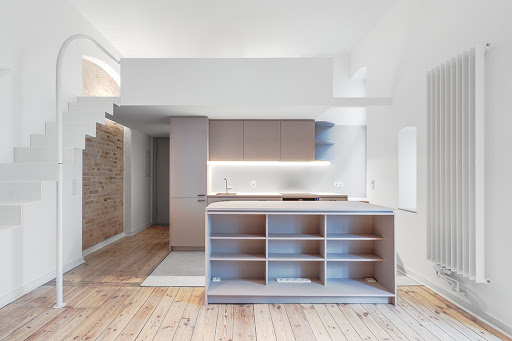
    Micro Apartment in Schoneberg — source Paola Bagna (creative commons license)

    An Opportunity & A Challenge

    Without a doubt, this is an exciting if turbulent time to expand any coliving, student accommodation or other temporary rental property. Growth seems guaranteed, but preparing for new ventures requires a great deal of planning, and, sadly, a lot of operational headaches!

    Managing furniture and other assets in an expanding building may seem like a daunting task for even the most experienced operations manager. Sourcing, buying, delivering, and installing furniture is one feat, but maintaining it and managing repairs is another.

    Reco could be the solution. This furniture leasing company rents furniture by the month to business clients in the Berlin area. Just select the style of your choice (Bohemian, Industrial or Scandinavian) and they supply everything you need to fully furnish an apartment, all at an affordable price, freeing up your capital for other ventures. The company operates a circular business model and emphasises repair or replacement, while offering you the option to try a new style at the end of your contract if you wish. If you don’t want to say goodbye to the furniture, there’s also the option to buy it — huge flexibility at a small price.

    When it comes to managing your inventory, Retrac offers a stress-free solution. Designed by industry experts, this software helps you manage all your inventory in one app. Simply stick the QR codes to your assets, scan, and see the asset’s location, repair history, supplier info, and other information. Employees can easily run inspections of full buildings, and log incidents for maintenance. Receive quality updates when items are in need of repair — saving you money on emergency repairs. Most impressive is the BI dashboard, which keeps track of all costs, stats and tickets — and even provides you with insights on how you could optimise operations in the future.

    For more updates on these exciting startups, follow Reco and Retrac on LinkedIn.

  • Why choose a furnished apartment?: Adding value for the tenant

    Here at Retrac, we stay curious and constantly up to date with trends in our client’s space. We have already explored why furnished apartments are becoming popular, and investment trends grabbing investor’s attention, but what are the advantages for tenants?

    In this post, we take a look at the tenant’s perspective. Understanding what is most valuable to tenants is crucial in this competitive market — going above and beyond to offer something extra is often what differentiates a super provider from the pack!

    The core value proposition — While past tenants often rented for long periods and preferred to bring their own furniture, many modern tenants plan to stay for a short while, and appreciate furnished apartments. Standard furnished apartments come with the basics, like a bed and desk, while fully furnished apartments often include extras like crockery, appliances or towels.

    src

    Flexibility — As the average millennial changes jobs every 2 years, it seems frequent location changes are to be expected. Uncertain projects and temporary jobs may mean that modern tenants are unwilling to commit to a 3-year lease like past generations did. Many newcomers use furnished apartments as a “base” while they settle into their new life, and eventually search for their own apartment. Providers can offer flexible contracts with short notice periods to facilitate these often unexpected moves and short stays. This low commitment approach encourages tenants who are unsure of their plans and may attract more bookings than a locked-in but seemingly higher-yielding contract.

    Reserve in advance — 60,000 people move to Berlin each year, and this is expected to rise to 200,000 by 2050. With its relatively low cost of living and bohemian edge, Berlin continues to attract more and more expats interested in working in the vast range of companies located here. In response to this demand, many providers now offer digital tours and an option to reserve rooms online before even arriving in Germany. This helps expats rest assured they will have a quality place to stay upon arrival. As it seems likely expat numbers will grow in the future, providers should invest in marketing internationally and making their booking and onboarding process as digital as possible.

    Design — Modern, tasteful design adds another dimension for prospective tenants. When faced with similar options, most flat hunters will choose pleasant surroundings and prefer nicely furnished flats that reflect their personality and taste. Providers should invest some time in understanding tenant’s preferences and potentially unlock new value.

    Furnished apartment bundles from Reco

    Community — Even during the pandemic, Millennials flocked to shared spaces, even in off-the-beat locations like smaller cities and the countryside. Young, single people who move frequently are often starting from scratch and eager to make new connections. Social spaces and providers which create a sense of community offer a premium experience. There’s also a network effect — the more rooms filled, the more people, thus the more opportunity to socialise.

    Asset Light — Millennials and Gen Z are making a shift away from ownership. In a trend known as “uberisation”, they prefer to rent, borrow or share assets if and when they need them, rather than investing in assets themselves. Tenants move frequently and may not have the budget or space to accumulate goods. Minimalism and a less encumbered way of living is the future. This offers flexibility for highly mobile tenants like digital nomads, freelancers or interns. It also presents a lower upfront cost to those on a budget. A provider could differentiate itself by offering something special, for example, the Student Hotel, which provides bikes for residents.

    Sustainability — Gen Z is the most eco-conscious generation yet. They are concerned about the planet, social justice, and reducing humanity’s use of natural resources. Coliving spaces, student dorms and other furnished spaces often offer an underexploited sustainable edge. Organisations such as Conscious Coliving focus on creating sustainable shared environments for this demographic. The option to share appliances and facilities with other tenants reduces the need for tenants to purchase new things, and electricity usage is generally much lower when shared in a large space. This helps reduce carbon emissions, as well as expenses.

    SRC

    Appliances — furnished apartments are far more liveable than hotels, and can feel like home. Cooking facilities and all the home comforts help tenants live self-sufficiently in a new place. Tenants appreciate facilities like coffee machines or washing machines, which save them from trekking around unfamiliar neighbourhoods looking for the services they need. Providers should get to know their tenants and understand what else could really add value to their stay.

    Services — Similarly, most furnished apartment providers include bills in the rental price. Waste collection, Wifi and things like electricity or gas are set up and handled by the provider. This takes a weight off the shoulders of newcomers who may not speak the local language or be aware of the process involved in setting these up.

    Local knowledge — Those arriving in Berlin for the first time are often unfamiliar with the city, its neighbourhoods, and other important information for flat hunters. Furnished apartment providers locate in trendy neighbourhoods and often offer help or recommendations for local businesses, bars or restaurants. This helps newcomers benefit from some local knowledge and feel they are seeing the best of their new city — an experience they would have missed in a private apartment. Larger providers could invest in activities and guides for tenants to make the most of their stay in Berlin.

    Furnished apartments are a solid investment for the future. They offer huge value to a large number of tenants, and demand is only likely to increase. While expansion is always exciting, it often comes with lots of operational headaches — especially when it comes to managing inventory. To learn how to digitise all your inventory management as well as save a lot of time and money, see our post: 10 Ways Retrac will benefit your business.

  • 10 Key Proptech Trends

    Now more than ever, the real estate landscape is in a state of disruption. 

    A new generation of highly mobile tenants (think new work, voluntary simplicity and digital nomads) expect high quality, high tech living experiences. More short-term renters means more competition among providers to differentiate and offer that added value. 

    On top of all this, COVID19 and remote culture has accelerated the digitisation of conservative industries — a new wave of solutions have appeared on the market to help manage properties. Real estate is approaching “Industry 4.0”, a completely digital way of managing its entire process. As of March 2021, there were 477 PropTech companies in the DACH Region and growing (proptech.de). Read on for insight on 10 prominent trends and key players in this exciting space.

    1. Search engines: These are the first step in the buyer journey, and perhaps the biggest change in the way buyers and sellers connect with each other. Online portals or “multi-sided marketplaces” have disrupted numerous industries — and real estate is no different. Platforms such as #Uber, #eBay, #Zalando & #AirBnB have changed the game when it comes to connecting providers and buyers. Crucially, these B2B2C companies require little capital — they don’t own the good or service they sell, and their core value comes in connecting demand with supply. Several players exist in the DACH real estate search engine sphere. With McMakler, property buyers and sellers can connect and interact with over 400 brokers. Nestpick serves as a kind of search engine for flat-hunters, who reach out to landlords on the platform. Wunderflats has the added feature of allowing tenants to pay for accommodation and create smart contracts in the app. Fypp is a meta search engine, combining listings from all these — with so many options, these comparison tools are a likely future trend in all areas of Proptech.

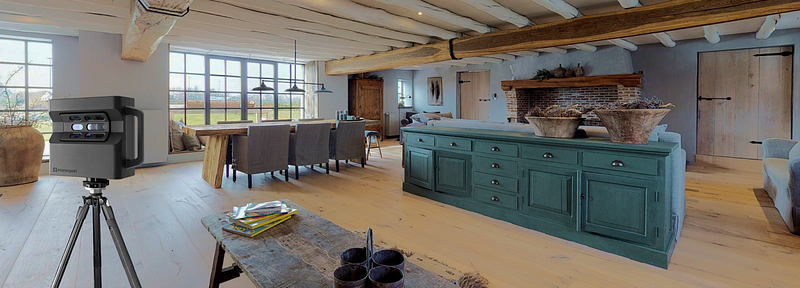
    2. Virtual reality — associated with the gaming industry, VR has many applications in Proptech, the most well known being digital home viewings. Especially during a pandemic, many tenants wish to view properties virtually before visiting in person. They may wish to view them at times outside normal work hours, especially where different timezones are involved. This is where VR comes in. “Digital twin” software such as Matterport lets landlords create virtual reality 3D tours, where tenants can “explore” the apartment. In an increasingly international market, tenants may be overseas and unwilling to travel solely to view properties. VR helps offer services to a wider range of customers, and enhance convenience for both the provider and the buyer. VR is definitely one to watch in the evolving, international Proptech space.

    src — Matterport

    3. Legaltech: Opportunities for innovation exist in the overlap between legaltech and proptech. As more and more business is conducted online, the demand for apps which facilitate signing contracts and meeting legal requirements at a distance has grown significantly. The global digital signature market is expected to grow 26.3% annually from 2021 to 2027. Smart documentation software such as MemoMeister helps you organise all your project files in the cloud. We can expect to see a growth in user-friendly technology that keeps all files in the cloud — especially in the traditionally paper-heavy property space.

    4. Remote management — Efficiently automating businesses processes, even in conservative industries, is the name of the game in 2021. PropStack lets brokers synchronize all data in one user-friendly interface. The cloud-based nature means different team members can access all information, regardless of location. Intelligent receivables management software such as Collenda helps manage claims and workflows, while ensuring good service for the customer. For busy landlords, there is growing demand for full property management services. Home.ht takes over all landlord tasks, from new letting to tenant support and rent collection. It also saves a lot of time from the tenant’s perspective — tenants can view, book and arrange moving in all within the app. With remote culture likely to stick around, remote management and outsourcing will be a growing trend.

    src — PropStack

    5. AI: AI is a hot topic in all areas of tech — and proptech has quickly caught up. Automated customer service bots which answer questions on behalf of the realtor, or even provide home tours, are expected to become commonplace in the future. [src] Homeday even offers an algorithm for valuing properties. In the future, we will see more and more complicated or tedious tasks taken over by AI. Not only does this free up the realtor’s time, it helps customers make faster and more informed decisions. In the future, it seems AI will take over more and more of the monotonous tasks, so employees can focus on dynamic areas which need a human touch — like strategy, customer relationship management, and innovation.

    6. Automation: Automation has endless uses in the Proptech space. “Smart home” automation technologies appear to be a win-win solution. As short term tenants expect energy and bills to be bundled into the rent, the onus is on providers to find energy efficient solutions for their buildings. Keeping these operational costs low enables property owners to offer favourable rates to their tenants — a competitive advantage. IoT Proptech services provide a distributed service to easily and effectively manage this key component. Smart Home Berlin enables tenants to control lighting, ventilation and room temperature from their smartphone.

    src — Smart Home

    Which brings us to another prominent trend –

    7. Sustainability: Controlling consumption and analysing data to see where energy is being lost is an added benefit for both tenant’s wallets, and the environment. Clearly, as eco-conscious Gen Z move into the workforce and rental spaces, we can expect increased attention to sustainability, particularly when it comes to technological solutions. Sustainable startups are springing up right, left and centre, catering for the ever-evolving needs of asset light, environmentally conscious consumers. Reco offers a sustainable furniture rental service, allowing landlords to benefit from short or long term rentals rather than buying. More globally, the organisation Prop Tech for Good is dedicated to technological innovation in line with achieving the UN sustainable goals. We are likely to see a move toward leasing, borrowing and sharing in the property space as the “uberisation” of assets continues.

    8. CAFM: “computer aided facility management” is the umbrella term for any software which helps manage a property’s logistics more efficiently. Inventory management services such as Retrac keep track of all furniture. With its innovative QR code system, all you need to do is stick the barcodes to your inventory, and scan them to see repair history, notes, and maintenance needs. All this info is compiled in a convenient BI dashboard. The app even provides quality updates and alerts when items are likely to need repair or refurbishment, prolonging the product lifespan and helping managers to avoid emergency, expensive repairs. This smart, “predictive management” is another likely trend in CAFM.

    9. Data-driven decision making — everyone knows data science is the future, and real estate is no exception. As we have seen, data analytics are increasingly used in identifying and predicting new market opportunities. Analytics platforms such as realxdata compile all your data and offers holistic insights and market analysis. The BI dashboard keeps track of all stats, saving users time they would have otherwise spent sourcing and crunching numbers. Finding creative ways to collate and visualize data in a digestible, actionable way will be a key area of opportunity in the future.

    10. Security — Security and privacy are increasingly areas of concern for the tech industry. Cybersecurity, hacking, and fraud have long been issues — but even those with little interest in technology are aware of security risks in their home. New technology to ensure your building’s security is constantly evolving. LifeSmart IoT offers remote monitoring and intrusion alarms, smoke/leak detection, and video surveillance. All details can be monitored in the app, even remotely. Proptech has changed home security, and we’re sure to see more exciting developments in the next few years.

    src — LifeSmart

  • Why rent a tent?

    Short promotional article for Tentshare, a UK P2P platform marketplace which rents camping equipment.

    Tentshare is an online platform to help would-be campers find quality tents, equipment and tips. Do you have camping equipment lying around? Let new campers enjoy it, and earn some extra cash along the way!

    Camping is simpler and more accessible than ever – just rent the whole kit and caboodle at a time and place which suits you. Here’s why renting is the way to go:

    New adventures.

    Spur of the moment camping trip? Enjoyed your last one so much that now you want to do something completely different? Tentshare makes both possible. Rent the tent that fits your needs and return it when you are finished. Avoid carrying equipment which only takes up space in your home when not being used. We hope you discover your lvoe for camping, and if you do, you can always rent another tent or buy one later on.

    Learn from experts.

    Our community of seasoned campers are here to give you the tips you need to craft your perfect camping trip. For insider advice, check out our Instagram and Facebook pages, or spark a discussion in our forum. Our community is all about protecting the landscapes we love so much. We want to change the “single use” mindset, and believe sharing is most definitely caring – whether that’s sharing tents, tips, or new experiences! You can message tent owners directly to ask any questions, and of course, Tentshare stands by to help out in the unlikely event you have any issues with your rental.

    Be part of the sustainable revolution.

    Staycation is one of the most eco-friendly holiday options. Flights generate massive carbon emissions, while camping is just about the best way to connect with nature. Sourcing the raw materials to make tents, then producing them in factories, generates a carbon footprint. We try to keep this as low as possible by sharing tents and reducing the need to buy new ones.

    Given that you may only need to use a tent now and then, it makes more sense (for both your pocket, and for the environment) to rent one. We are excited to offer the UK’s largest range of tents for rent and are sure we have one to fit your needs. Check out out full range, and don’t forget to folow our social media for tips on making the most of your next adventure.

    Camping Grounds Munich - official Website for Munich
  • “Keeping it clean” – circular economy principles in an ecofriendly laundry company

    Text written for a report for Bide Boxes. This UK company implements a new production method to create ecofriendly laundry and dishwashing products. Ingredients are sourced locally, then shipped to “homemakers” who assemble the products and distribute them locally.

    Social Enterprise: eco cleaning boxes | Indiegogo

    Our Vision

    We love clean concepts of all kinds, and keeping our planet clean is our top priority. 

    We are increasingly aware that the products we use to keep clean in fact have a disastrous effect on our environment – from the massive amount of waste generated by single-use plastic, flown around the world, before inevitably adding to the chemical pollution of our rivers.

    We also know that so much of the devastation wreaked by climate change is completely preventable, and we are determined to find more environmentally-friendly solutions that align with our values: honesty, transparency and preserving earth’s beauty for future generations.

    Here’s how we are changing things.   

    Existing cleaning products

    Virtually all UK households consume detergents for washing machines or dishwashers. Traditional products use harmful chemicals and are too intensive – harming the environment, and adding to your carbon footprint. “Universal design principles’ ‘ which guided product design in the past encouraged cleaning companies to use the strongest, harshest ingredients in every product – so that it could thoroughly clean in even the toughest situations.

    However, this level of chemicals is rarely necessary. We want to lead the change and offer an eco-friendly alternative, with all the same (if not more!) benefits.

    What are we doing as a company to reduce our carbon footprint?

    Reducing our carbon footprint is a core part of our mission. We incorporate circular economy principles and commit to reducing waste at every stage of our product’s lifecycle.

    Production: Bide relies on a “cottage industry” production chain, where locals can become “home manufacturers” and distribute the product locally – greatly reducing transport costs. We are a proud British brand, focusing on improving the communities we live in. For now, we only operate and ship within the UK. We source raw materials sustainably and minimise use of chemicals.

    Efficient transport network – Right from the start, our “home manufacturers” are key in reducing our transportation footprint. We ship products to local home-based manufacturers, always ensuring that the product is manufactured no more than 30 miles from the point of sale. No long-haul lorries, steam ships or flights – we are a local-focused business determined to support other small businesses as we grow.

    Efficient ground transportation.  On the ground, we use efficient, community-based methods like public transport as far as possible. Our “home production” system means our products are created in your local area and delivered no more than 30 miles. This minises transport costs and removes the need for polluting longhaul lorries or planes.

    Packaging – All our packaging is sourced in the UK and is fully recyclable. Even the stickers on our products are vinyl-free, improving our overall brand sustainability. 

    Use: We create new tips and hints to minimise the amount of product you need to use – saving you money, as well as helping your carbon footprint.

    Disposal: Our products are fully recyclable, with all materials going back into circulation. 

  • What is SEO? 10 Tips for Beginners

    Article/information written for a client who wanted to explain the very basic conceptc of SEO to their team.

    SEO (Search Engine Optimisation) is the process of making your webpages as “readable” as possible – both to people, and search engines.

    Google uses “crawlers” to scan pages on the internet and rank them based on their readability. When people google a phrase, Google shows them the websites with high rankings first. This means those websites “rank higher” on the search engine results pages (SERP).

    Note that Amazon and Euroflorist, companies with highly professional SEO practices, appear first. Smaller florists with less readable websites may be on the 2nd, 3rd, or even 45th page depending on ranking, and are rarely discovered by searchers.

    90% of googlers do not look past the first page of search results, so appearing on the first page is a high prioirty. The goal of this is driving “organic traffic” (clicks from new visitors who found you on Google, as opposed to paid advertising). So, just how do people do this?

    Understand your audience’s questions.

    The primary way to rank higher on the SERP is to answer the questions people are Googling. If someone googles “where can I rent a tent”, pages which use this phrase and the keywords (“rent, tent”) will appear higher up.

    Identify and target keywords.

    Go to Keyword Rank Checker, and search the keywords you think relate to your website. You can find out where your webpage “ranks” compared to others, i.e, where it will appear on the SERP if someone searches this keyword. Check if a keyword is “longtail” or “short-tail”- this tells you how many competitors you have, and how easy it will be to “rank high” for it. For example, ranking high for “shoes” would be very difficult (longtail) as there are many, many websites selling shoes. However, ranking for “parking near Green Street” (short tail) receives fewer searches but has few competitors, and is easier to rank for.

    User experience.

    Make sure your website is well lined out, easy to navigate, and helpful. A high “bounce rate” (people who click in to your site, read for just a few seconds, find it unhelpful, and go bck to Google) will lower your rating.

    Landing page.

    Make sure your landing page has a fast page load speed and that all sections of your website are accessible from it.

    Original content. 

    Avoid copy and pasting content form other websites. Google prioritises pages with unique content which directly answers the search question. Pages with plenty of relevant content (aticles, videos or other information) rank higher. Googl’e mission is to connect people with the answers they want, so Google prioritises the pages it feels can do this. 

    Use headings, subheadings, paragraphs, and bullet points.

    Google prefers readable formats. Lists (especially of 3, 5, or 10 points) are deemed most readable by the algorithm. Ensure you use headings (h1), subheadings (h2), etc. Optimising these so the page is broken in to more readable parts is just one aspect of on-page SEO. Use bold font for primary keywords.

    Short paragraphs and mixed length sentences.

    Keep paragraphs short, and make sure all information is snappy and well-written. Google also prefers paragraphs with some short and some long sentences. This is considered more readable.

    Images.

    Include images, but make sure you always provide the copyright and description. The description cna be found in the image’s code and describes the image content for Google’s crawlers (it is also what is read allowed to blind computer users).

    Backlinks.

    Google prefers pages which link to many other pages on the internet. You can also include links to other pages or articles in your domain. Google prioritises this “connectedness” as it is more likely to direct searchers to the answers they requested. Page ranking also increases if you receive a lot of backlinks, especially when these backlinks come from highly-ranked pages. Fix pages which have “broken backlinks” (links which lead to the wrong page or pages which java been deleted), as you will be penalised for this.

    18 Best SEO Tools That SEO Experts Actually Use in 2021
  • Camptoo: A Sustainable Staycation Idea

    A short promotional text for camptoo, a caravan rental service based in the UK.

    Target audience: medium/high earners in London. Families, road-trippers, and other staycationers.

    Otherworldly adventure is closer than ever. Scotland’s stunning North Coast 500 route is a 516-mile road trip encompassing epic landscapes, romantic castles, and even a few distilleries. Beginning at the Castle of Inverness, this route winds through farflung country roads to unveil Scotland’s world-renowned beauty, from pristine beaches to craggy mountains. If you haven’t yet experienced these wonders so close to home, now is the time to do so – all in the knowledge that your staycation choice is helping reduce those nasty carbon emissions.

    Coast Scotland Rock - Free photo on Pixabay

    With so much to see, renting a campervan is the perfect way to discover Scotland. Proud providers of the UK’s largest selection of insured campervans and motorhomes, CampToo is sure to have the perfect vehicle for you. Just select your pickup location and number of travellers to explore the full range.

    We want everyone to experience the wonder of Scotland, now, and forever. Renting a campervan is not only up to 40% cheaper than traditional rental companies, it’s also more sustainable. Here’s an example:

    Taking the train from London to Edinburgh and picking up a campervan there reduces your carbon footprint by 250kg (compared to driving your own van the long route north).  Compare this to the carbon footprint generated from an economy flight to New York – 3,260kgs – and you realise yet another benefit of this spectacular staycation. 

    Two people touring 2000km in our rented campervan generate just 500kg of carbon footprint. Compared to  7,020kg generated from a premium flight and car rental in New York.

    At the end of your trip, simply return the campervan so someone else can enjoy an epic trip of their own. Enjoy the carbon-friendly trip of your dreams, when you want, where you want, always with zero hassle.

  • Report: Coffee & Your Carbon Footprint

    The Coffee Industry

    >Industry overview

    • Key facts: > 9.5M tonnes of coffee (9.5 billion kg) is produced annually. The total trade value is US$30.9 billion (2019)
    • Coffee is the world’s most widely traded tropical agricultural commodity (ICO, 2011). 
    • Every day, the world drinks around 2 billion cups of coffee.
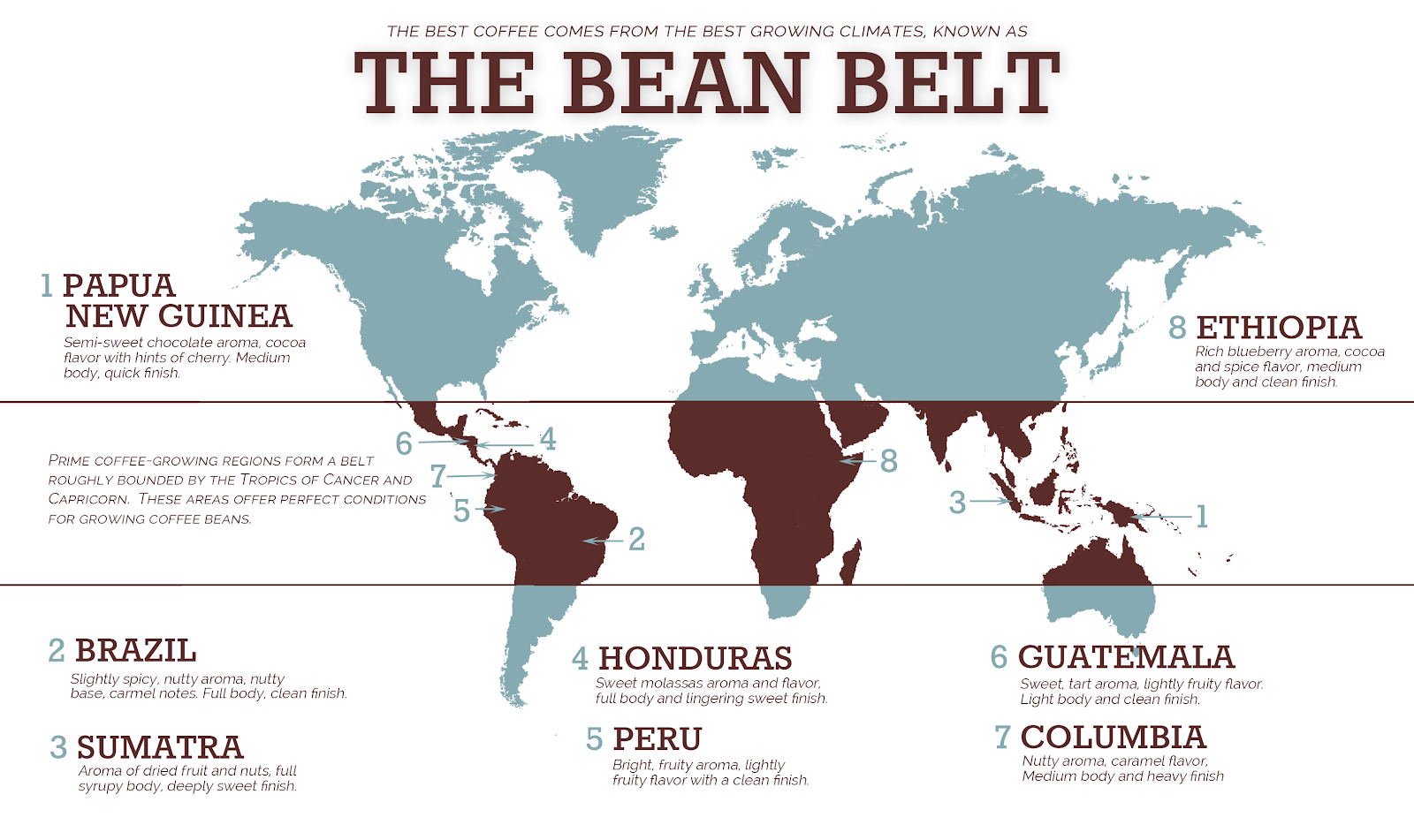
    • Raw materials: There are approx 12.5 million coffee farms in around 70 countries, termed the “bean belt”.
    • Each farm produces an average of 0.75 Tonnes of coffee. 

    source Ohio University

    • A global industry: Coffee is grown in tropical countries, but mostly consumed in North America and Europe. A global supply chain means intercontinental transport by plane or cargo ship, which adds to the carbon footprint.

    Source: Wiley

    • Industry forecast: Due to growing market demand in Asia and Oceania, coffee is expected to triple production by 2050, raising pressure on forests and other habitats. It is important to rethink our environmental impact and reduce our carbon footprint as the industry growth accelerates.
    • The main players in the global coffee industry:
    • Source: Mordor Intelligence

    > Coffee Production

    What is the coffee life cycle?

    Coffee production is a multi-stage cycle. There are multiple areas where companies could innovate and exploit opportunities to reduce their environmental impact.

    Harvesting: by hand or machinery

    Shelling: Remove fleshy outside layer, pulp is composted

    Drying: Depulped beans dried to 12% moisture (by sun or machinery)

    Dissolution: For decaf – dissolve caffeine

    Roasting: Roast beans to over 200 C (only 10 degree difference between light roast and dark roast)

    Freeze drying: Instant coffee is freeze dried

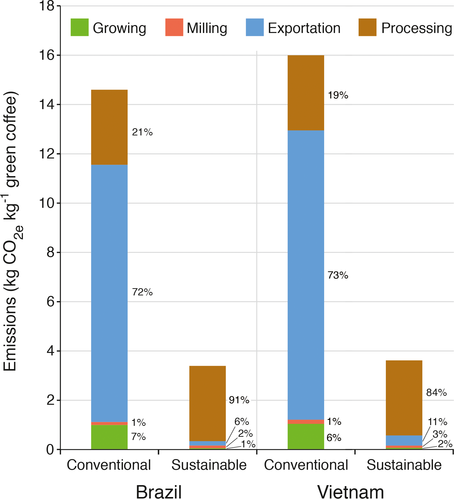
    The graph below shows the issue resources at each stage of the total coffee process (growing, milling, exporting and processing):

    source: Wiley

    Yield: 1kg of “green coffee” makes 56 espressos

    Carbon footprint: coffee industry

    -The full carbon footprint of coffee “from bean to cup” is estimated at 59.12 g CO2e per cup of coffee (PCF Pilotprojekt Deutschland, 2008). 

    – In calculating the footprint of a “cup of coffee” it is important to understand the impact of the actual coffee, heating the coffee and the additional footprint of 

    Comparing the footprint of tea and coffee: 

    The carbon footprint of a cup of tea or coffee:

    21g CO2e: black tea or coffee, boiling only the water you need

    53g CO2e: white tea or coffee, boiling only the water you need

    71g CO2e: white tea or coffee, boiling double the water you need

    235g CO2e: a large cappuccino

    340g CO2e: a large latte

    Source: Mike Berners Lee (Guardian Article)

    Breakdown of the main contributors to carbon footprint (Brazil and Vietnam)

    • Carbon dioxide: Weight for weight, coffee produced (by the least sustainable means) generates as much carbon dioxide as cheese and has a carbon footprint of almost 50% one of the worst offenders – beef
    • Growing phase:  Fossil fuel use (66% and 39%) and electricity use (16% and 51%) are the largest emission sources in the growing phase. (Brazil and Vietnam)
    • Milling phase: Fossil fuel is the largest emission source, contributing 96% and 84% of emissions in Brazil and Vietnam, respectively. 
    • Transporting: Growing 1kg of arabica coffee in Vietnam or Brazil and transporting it to the UK produces greenhouse gas emissions equivalent to 15.33 kg of carbon dioxide on average.
    • Source: Wiley

    Comparing to beef (weight for weight)

    • While coffee has half the footprint of beef weight for weight it is important to understand the impact of typical portion sizes
    • An average cup of coffee will have 8 grammes per serving whereas a typical serving of beef will be 100 grammes (Mayo Clinic) and average recommended daily US intake of 160 grammes.
    • So the portion size of a cup of coffee (8 grammes) will be 12.5% the size of a average beef serving (100 grammes) and 6.25% of the carbon footprint of a serving of beef 
    • These comparisons are for normal production of coffee. Sustainable coffee has a much lower footprint (see below)
    • Coffee is plant based compared to beef which is ruminant based

    > Conventional production vs Sustainable production

    • The total carbon footprint of conventional coffee production was 36 and 22 times higher than sustainable production in Brazil and Vietnam, respectively.

    Source: Wiley

    Conventional vs sustainable growing: Just one espresso has an average carbon footprint of about 0.28 kg, but it could be as little as 0.06 kg if grown sustainably.

    This data is based on a detailed life cycle assessment of the carbon equivalent footprint of coffee produced in Brazil and Vietnam and exported to the United Kingdom. 

    Source: Wiley

    Conventional v Sustainable Carbon Footprint

    Results on the average carbon footprint of Arabica coffee from both countries:

    kg of carbon dioxide equivalent per 1 kg of green coffee (kg CO2e kg−1 ) 

    • 15.33 (±0.72) kg for conventional coffee production
    • 3.51 (±0.13) kg for sustainable coffee production. 

    There is currently no data available on the split between conventional and sustainable coffee production but we can extrapolate that the total Global footprint sits in a range between   

    What drives the difference in the Footprints?

    The 77% reduction in carbon footprint for sustainable coffee production was driven by two causes. The transportation of coffee beans via cargo ship rather than freight flight and the reduction of agrochemical inputs. The transportation factor is by far the most significant. 

    The research team also identified that further reductions could be made through optimal use of agrochemicals; reduced packaging; more efficient water heating; renewable energy use; roasting beans before exportation; and carbon offsetting. The team saw opportunities in using certification schemes to implement the other environmental impacts of coffee cultivation.

    https://www.sciencedirect.com/science/article/abs/pii/S0959652614001474

    How could the coffee industry lower its carbon footprint?

    Land use:Interestingly – coffee plants capture approximately 35% as much CO2 as the same area of woodland. (source)

    Corporate solutions: starbucks sustainable coffee challenge, 99% ethically sourced, traceable Nespresso AAA sustainable quality program, aims to reduce the carbon footprint of a cup of Nespresso coffee by 28% by 2020 in comparison to 2009 (Nespresso, 2019b). Strategies in the programme range from designing more efficient coffee machines to agroforestry and are informed by life cycle assessments (LCAs). 

    Transporting: the use of cargo ships for the transportation of coffee beans from the production countries to the United Kingdom instead of freight flights reduced estimated emissions by 10.3–11.3 kg CO2e kg–1 green coffee. Transportation via cargo ship takes 24 times longer from Brazil and 48 times longer than Vietnam. However, ships carry far more coffee beans than planes, reducing the number of journeys. This “slow travel” in the supply chain could greatly help reduce the carbon footprint. (source)

    Crop production: Using renewable energy in crop production can reduce the carbon footprint of crop production by up to 70%. (source)

    Roasting before exporting: Roasting coffee beans reduces their weight by more than half but the volume remains approximately the same. This makes a big difference to air freight which is focused mainly on weight but less important for international shipping that is mainly concerned with volume. Roasting the coffee beans before exporting them could reduce the carbon footprint where air freight is used.(source)

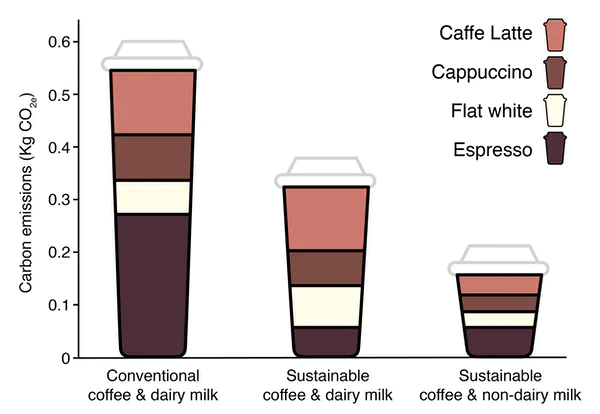
    Carbon footprint: Coffee drinks

    Conventional Production Sustainable Production

    Lattes 0.55kg 0.33kg

    Cappuccinos 0.41 kg 0.20kg 

    Flat whites 0.34 kg. 0.13kg

    Canned coffee: 0.76 kWh and 223 g CO2 per serve. 

    Latte:  0.54 kWh and 224 g CO2 per serve.

    Espresso coffee: 0.13 kWh and 49 g CO2 per serve.

    source: Science Direct

    Canned coffee: Despite only holding around 17% of the coffee market share, canned coffee products contribute around half of the national carbon footprint from coffee consumption. source: Science Direct 

    Milk: the question of methane emitted from cows and the carbon footprint of the dairy industry also needs to be taken into account when consumers add milk to their coffee.

    How can coffee consumers lower their carbon footprint?

    Home brewing: During the lockdown, sales of supermarket coffee and home brewing or coffee machines increased dramatically [The Guardian]. While consumers avoid the waste associated with takeaway coffee cups, coffee machines use a significant amount of energy. Since 2013, coffee machines sold in the EU must have a power management function that automatically switches the machines to a standby or off mode after the shortest possible time period of intended use (Josephy et al., 2013). 

    Water usage: “how you prepare your coffee at home can add 50% or more to its overall environmental footprint.” When you boil a full kettle of water, the energy expended is greater than the total energy expended in producing and transporting the cup of coffee to you. (The Conversation)  Numerous articles encourage consumers to only boil as much water as they need.

    Glass Jars: Highly recyclable and not particularly energy-intensive to produce. However, glass is very heavy compared with other materials. Fewer glass jars can be transported than a lighter alternative, adding to transport costs and carbon footprint. (The Conversation

    Pods: Pod-style systems in fact use less coffee and electricity per cup. However, excessive packaging waste contributes to their overall carbon footprint. They are also the bulkiest form of transport, fitting the least servings per vehicle, thus increasing transport costs and fuel use. They are heavily processed and not recyclable. (Source: Wiley)

    Recycled plastic: Arena et al. (2003) estimated a carbon footprint reduction of up to 85% where recycled plastic was used to produce packaging in comparison to virgin plastic.

    Single use/disposable coffee cups: The standard ‘to go’ coffee cup is made from paper, but coated in polyethylene – this keeps the coffee hot for longer and prevents the paper cup from collapsing. However, it makes it impossible to recycle! 6.5 million trees are cut down by the disposable coffee cup industry each year, and the production process uses as much energy as powering 54000 standard homes annually. By using one disposable cup a day, you generate 10kg of waste per year. (Source: Green Match)

    Coffee cup lids: typically made from polypropylene or polystyrene #6, a petroleum-based plastic that is difficult and unprofitable to recycle.“The sorting, cleaning, and melting of polypropylene is more expensive than creating virgin or new polypropylene lids.” Consider asking for coffee without the lid to save on plastic waste.  (Source: Green Match)

    Coffee stirrers: not ethically sourced or recyclable. Consumers are recommended to get in the habit of bringing a reusable spoon and fork with them, and using the spoon to stir if needed.

    Reusable cups: It requires resources, energy and manufacturing to create reusable cups, but these products have a much longer lifecycle and help to reduce environmental impact. A reusable coffee cup reaches a break-even energy output at around 17 uses.

    How does drinking 1 cup of coffee per day contribute to carbon emissions?

    Results from BBC Carbon Footprint calculator.

    Other Environmental issues associated with coffee

     > Climate change crisis

    Coffee requires very specific temperatures and conditions to grow. Arabica must be kept at 18-21 degrees with cool down periods (cooler nights) and adequate but not too much rainfall. The best conditions are found in Colombia, where certain elevations create prime conditions. However, the region has warmed by 1.2 degrees since 1980, causing some crops to overheat and farms to be no longer viable.

    As tropical regions are disproportionately affected by climate change, some regions will no longer be able to grow their staple crop, coffee.

    Farmers are opting to grow the “easier” Robusta crop (rather then Arabica, which requires specific temperatures). Robusta yields much lower profits, leading to poverty for farmers, and the “Global Coffee Crisis” in 2002, when coffee prices, and profits, were lower than ever in history.

    Ethiopia is expected to lose 60% of its coffee producing capability by 2060, with disastrous effects for peasant coffee farmers and coffee supply worldwide.

    > Threat of extinction

    All major coffee producing countries have been affected by the fungal disease “Coffee Leaf Rust”. The 2011-2012 Central America outbreak caused US$3.2 billion in damage and lost income. Over 60% of species are threatened with extinction, putting pressure on farmers to meet increased demand for the crop. Wild coffee species – and wild varieties of the commercial species – are almost all in decline due to competition for land use and overharvesting of the coffee plant for timber or firewood.

    “Half of the world’s coffee could be gone by 2050” – https://www.youtube.com/watch?v=BbxAt1ldZ0c&ab_channel=VICENews

    > Other Environmental Issues

    -effluent release

    -fertiliser use, affects flora, fauna, groundwater

    -intensive water use, leading to shortage and disputes between communities

    -habitat destruction

    -displacing local communities

    -human rights, worker exploitation

    carbon emissions associated with flying to usa and eu (roughly 15% of GHG emissions in coffee’s lifecycle attributed to international transportation)