In June 2024, I spent 4 weeks solo travelling the East Coast of Australia. It was a once-in-a-lifetime experience I won’t forget any time soon 👍
I’m a nerd so I read 100s of articles to plan my trip. I only had 4 weeks, and most blogs plan for way longer than that. I wanted to see a lot, but I wanted to actually relax on my vacation and not feel ‘on the go; every day. I wanted to have cool experiences, on a small budget.. But I’m too old and boring to hitchhike or share a dingy room with 20 backpackers. So I tried to have a ‘nicer’ time, without spending too much.
My trip may not be the typical backpacking route, but I think I still managed to see a lot, have a good time, and not break the bank.
I decided to write these articles to share my tips and hopefully help you make the most of your trip!
In this article:
- How long do you need for an Australia trip?
- 1-month Australia itineraries & routes
- Visa for your Australia trip
- Is Australia safe for solo female travellers?
- Finding deals on flights
- Getting around Australia – flying, trains, buses, cars
- Health insurance
- Phone SIM & internet
- Where I went & Destination Guides
Dive deeper:
I also wrote articles with my tips for each place I stayed in.
- Stop 1: Brisbane & Queensland
- Stop 2: Airlie Beach, Whitsundays & the Great Barrier Reef
- Stop 3: Sydney & the Blue Mountains
- Stop 4: Melbourne & The Great Ocean Road
How long do you need to see Australia?
Australia is a MASSIVE country. It’s the sixth-largest country in the world, and there’s such a huge variety of landscapes, it feels like visiting multiple different countries.
Lots of people told me, you need 3 months, or 6 months, or 9 months, to properly see Australia. Some recommend doing a Working Holiday Visa or living there for a year, using your free time to travel around.
I think they’re right – there’s a huge variety of stuff to do there – but I also think you need to make the most of opportunities to travel and do what you can, when you can. I don’t know if or when I’ll have 3, 6 or 9 months free and be able to afford to do a longer trip. So I leapt on the chance to go for 1 month, and tried to make the most of it. I’m happy to say I still did a lot of cool things, even with a ‘small’ timeframe.
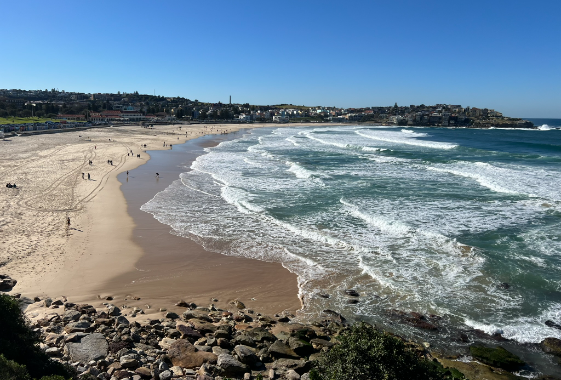
Itineraries/routes for 1 month in Australia
Backpacking Australia is a VIBE. About 80,000 people go there every year to do a Working Holiday (a temporary visa where you travel around doing casual work), and it’s one of the most popular backpacking and travel destinations.
The main routes people do are:
- The East Coast backpacking route (the most popular one, I did this, but just the highlights)
- The West Coast backpacking route
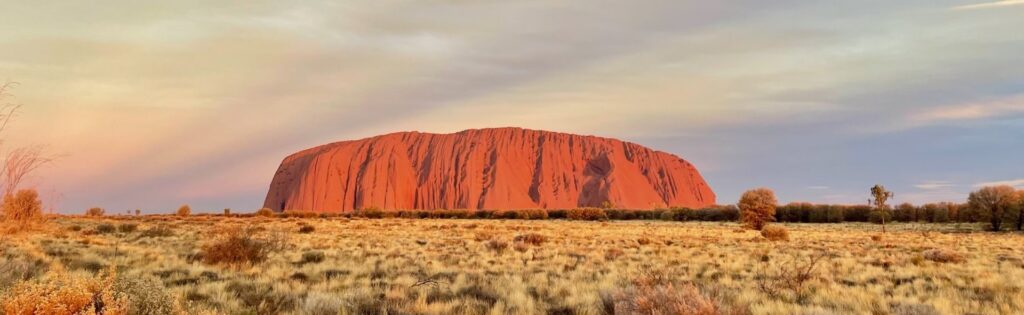
- The Outback/desert and visit places like Uluru (Ayers Rock)
If you have more time, you could consider doing both coasts, or doing 1 coast and the Outback.
I heard raving reviews of Uluru and wished I had had time to go there. Sadly, its very remote location makes it difficult and expensive to visit if you’re basing yourself on one of the coasts.
Given I just had 28 days, I went for the classic East Coast backpacking route. I wanted to minimize my travel time, so I picked 4 ‘stops’ and used them as bases to explore:
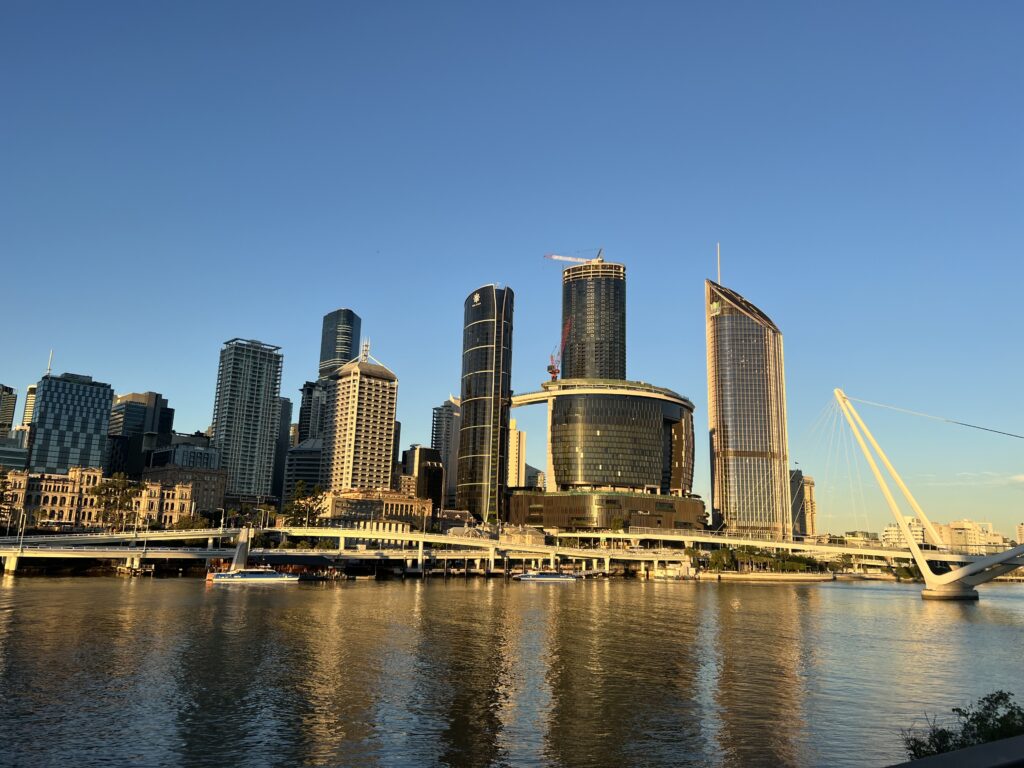
- Stop 1: Brisbane & Queensland
- Stop 2: Airlie Beach, Whitsundays & the Great Barrier Reef
- Stop 3: Sydney & the Blue Mountains
- Stop 4: Melbourne & The Great Ocean Road
Visa for your Australia trip
Australia has a reputation for being strict on visas and immigration, but I actually found the visa process very simple and stress-free. The most important thing is to apply for your visa as far in advance as possible, as there could be delays. You also need to apply for the visa while still outside Australia – you can’t do it when you arrive.
Here are some of the most common visa options:
- ⭐Subclass 651/eVisitor: This is the easiest tourist visa, and it’s what I did. Subclass 651 lets you stay in Australia up to 3 months and it’s free. I downloaded the ETA app and handled the whole thing within 10 minutes. If your passport ins’t elligible for Subclass 651, try Subclass 601 (basically the same conditions but costs $20).
- Subclass 600: Stay up to 12 months, but it costs $195, so if you know you’re only staying <3 months, 601 is a better option. They can decide to grant you 3, 6, 9 or 12 months depending on a few factors.
- Subclass 417: First Wokring Holiday Visa: this is what you need if you plan to work temporary jobs (hospitality, picking fruit, odd jobs, etc) while you travel. It costs $650 and lets you stay in the country up to 12 months (a 2nd working holiday could be possible under some circumstances). Take note you must be 18-30 years old (35 for some countries), and will need to complete 88 days of regional work.
Is Australia safe for solo female travellers?
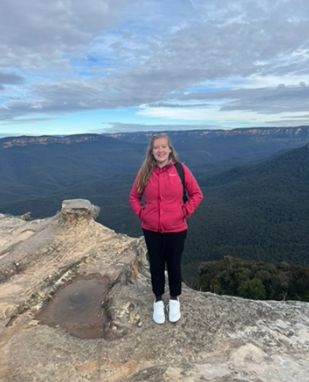
This was my first solo adventure. I wanted my partner or a friend to come, but nobody else had 28 vacation days to burn all at once like I did. I was worried about all the things that could go wrong.. but I’m happy to say Australia is the perfect destination for traveling alone!
It’s a very safe, friendly country, and infrastructure is designed for tourism. It’s very easy to navigate. You will meet tons of other people traveling alone and it is a very social vibe.
If you’re lonely, try to do guided tours and group activities as much as possible. You will feel safer in a group, meet cool people this way, and it’s nice to relax and let the guide worry about the logistics and planning.
Finding deals on flights
My return flights from Berlin to Australia cost around 1200 euros. This seems like a lot of money, but it’s actually pretty cheap as far as flights from Europe to Australia go.
I used Skyscanner to find the best deals on flights. Sadly I don’t have any very cool hacks to get deals, but here’s some general tips:
- Decide which route you are doing. Then, be flexible on where you fly in. Most people start the East Coast route in Melbourne, and work their way up to Airlie Beach or Cairns. I did the opposite – I started in the north and went south. If you’re flexible on where you fly into, you’ll probably find better deals.
- Usually – the more layovers, the cheaper it’ll be. On the way there, I went from Berlin to Brisbane with a layover in Doha, and on the return journey I went from Melbourne, to Singapore, then to Istanbul, and finally Berlin (around 35 hours total travel time). Doing 2 layovers made my journey very long, but the flight was only 400 euros. Since I was traveling for 4 weeks anyway, I didn’t mind taking the bones of 2 days to get home..
Getting around Australia – flying, train, bus, or car
- Flying: Australia is a huge country, so you’ll probably end up flying domestically, especially if you have a short timeframe.. I flew from Brisbane to Airlie Beach, and from Airlie Beach to Sydney, as these distances were too long to go by land. Check Google Flights or Skyscanner and book your flights far in advance to get better deals.
- Train: I took the train from Sydney to Melbourne, which took around 11 hours. Trains in Australia are usually reliable and sometimes cheaper than flying – but be prepared for long journey times. Check out australian-trains.com for more info.
- Bus: Greyhound Australia is the most popular bus company in Australia. They can bring you to most of the well-known and touristic places, and it’s usually much cheaper than flying or taking the train – but be prepared for VERY LONG journey times. Greyhound could be a good option for a day trip or getting to a nearby stop on your route, but if you have only 4 weeks, you really don’t have enough time to see the whole East Coast using Greyhound.
- Car: People who stay in Australia longer-term often buy or rent a car and road trip around. This way, you can visit more ‘out of the way’ destinations and take your time. Make sure to get your International Driving License before leaving, if that’s your plan!
Health Insurance
Most visitors aren’t entitled to use Australia’s public Medicare system.. That means if you get sick or have an accident, you could end up paying astronomical fees for treatment. It’s smart to get health insurance in advance.
- If you have health insurance at home: Your provider at home may not cover you if you get sick or have an accident abroad, especially if you’re outside the EU. Check with your provider and see if they offer any add-ons. I have normal public health insurance in Germany, through Technicker Krankenkasse, so I bought ‘add-on’ insurance for outside Europe from TK’s partner Envivas. It only costs 14 euros per year and was extremely simple to set up.
- If you don’t have health insurance at home: Forbes has a list of the best travel insurance policies for visitors to Australia.
Internet
You will need to get an Australian SIM card for your phone, or find some other way to reliably have internet access. Especially if you’re traveling alone, you’re going to rely on the internet to use Google Maps to get around the city, email, find your reservations/tickets, and a lot more. Save yourself some stress and sort out your internet before arriving.
- I got a Holafly eSIM card, which was extremely easy. You buy the SIM online, scan a QR code, and then the eSIM (digital SIM, there is no physical card) is in your phone. I activated it when I touched down in Australia and had unlimited, reliable internet for the whole trip. You pay for the number of days you will need, in my case (30 days), it was around 65 euros.
It looks like there are some cheaper options, so it’s worth shopping around.
Where I went & Destination Guides
That’s just about everything I researched before heading to Australia. The next thing, and maybe it’s the biggest thing, is deciding where to stay, what to do, and what to eat in each destination!
Check out my article series to get all my cheapskate tips:
- Stop 1: Brisbane & Queensland
- Stop 2: Airlie Beach, Whitsundays & the Great Barrier Reef
- Stop 3: Sydney & the Blue Mountains
- Stop 4: Melbourne & The Great Ocean Road
Leave a Reply