Newsletter content created for ActBlueNow
Target audience: teenagers and young adults in Ireland / demonstrated interest in climate change, sustainablity, environmental issues
Beef is a huge industry, with a huge impact on your carbon footprint.
With 1.3 billion cattle globally, the beef industry is worth almost 332.5 billion USD src. Beef production increased from 56 million tonnes between 2016 and 2019, and is expected to grow another 3.3% by 2026. This equates to a total carbon footprint of around 2,000,000 million tons – far greater than the total carbon footprint of Ireland, around 40 million tons.
Where is beef produced?: The USA is both the top producer and consumer of beef. Brazil is the #1 exporter. Consumption of beef is high in richer countries in the USA and Europe, but less so in “the Global South”. This is part of a bigger trend – often, environmentally harmful foods are grown and produced in cheaper, developing countries, and exported for sale in richer countries.
For this reason, consumers aren’t always aware of how beef is produced, and the environmental damage associated with the industry.


Why is the beef industry growing so much? Beef has evolved from being an expensive commodity that only men ate (source) to one of the western world’s most popular foods. Why?
- Availability: Increased demand has encouraged farmers to breed extremely large “beefy” cows which produce more meat – fuelling demand even more. Refrigerators have made it possible for people all over the world to bulk buy and freeze beef.
- Marketing: The US Beef Industry spends 800 million dollars a year to convince consumers beef is the best option. There is emphasis on its taste, versatility, and high protein content (31g per 100g).
- Growing world population: Gobally, the beef industry is growing thanks to increasing incomes and new markets. The world population is quickly increasing (source), and the beef industry is determined to expand and create consumer bases in new-emerging markets, such as China.
The world population is growing, but this doesn’t just mean new customers – it means new challenges in making sure there is enough food for us all.
The bad news?: beef is not a sustainable industry for the future.
A drastic overhaul of agriculture is needed in order to feed the growing billions without destroying our planet and worsening climate change even more (source).
By 2050, the world will need to provide 56% more calories than it did in 2010. We need to reduce our consumption and find more sustainable food – before it’s too late.
How does beef affect my carbon footprint?
Beef’s carbon footprint is enormous – generating 36 kilograms of CO2eq per kilogram of beef produced! It contributes 65% of all emissions from the livestock sector.
The emissions from beef production alone are equivalent to the total emissions generated by India – a country of over 1 billion people! (source)

How can one industry do so much environmental damage, and how does consuming it contribute to your carbon footprint?
Resource-intensiveness – Producing beef requires a crazy amount of natural resources to produce relatively small quantities. Beef requires 20 times more land and emits 20 times more GHG emissions per gram of protein than plant proteins like beans do. 1,800 gallons of water are needed to produce one pound of beef, and this excessive water by big companies can create shortages for local people.

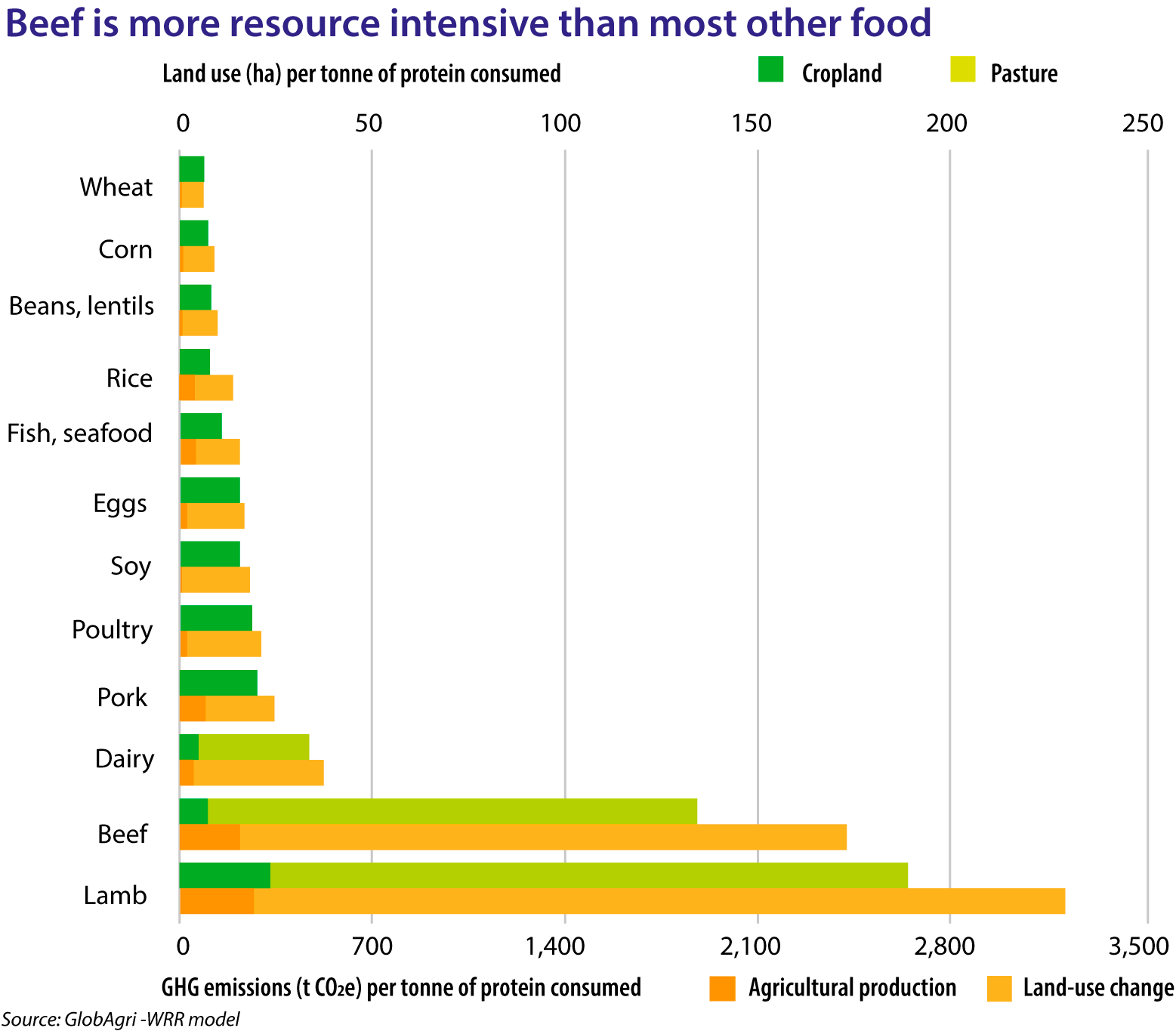
Fertilizers and agrochemicals – The fertilizers used in growing animal feed emit nitrous oxide, and are often poisonous to land when used long term. The runoff from chemicals can poison local water and create “dead zones”, where nothing else can grow. When the land is destroyed, farmers cut down more forests to expand their growing farm. Which brings us to..
Deforestation – As the demand for beef grows, farmers cut down forests to make more space for beef cattle. After a few years, the overfarmed land is destroyed, so farmers move on, and cut down more trees. 70% of rainforest destruction in the Amazon is attributed to beef farming. (source) When these forests are cut down, the carbon they stored is released into the atmosphere. Burning forts toxifies the air even more quickly. Native grasslands are cut down to make room for beef. Tropical deforestation for agriculture and tree plantations releases 2.6 GtCO2 yr. (source)


Not only do we use the carbon-storing advantages the forests provide, we replace them with something that pollutes the atmosphere – cows.
Enteric fermentation – Livestock create 14.5% of all greenhouse emissions (source). Cows’ are “ruminant” animals, meaning their digestive system naturally ferments their food and creates methane gas as a byproduct. This is released into the atmosphere when cows burp or pass gas. Methane is an extremely potent greenhouse gas – scientists estimate it was responsible for 23% of climate change in the 20th century! (source)
Manure mismanagement – A typical beef cow produces around 55kg of manure per day. (source) Poor management and dumping of the cow’s manure means this dangerous gas builds up and erodes the ozone layer.
Beef is simply not sustainable. Although the industry is eager to sell even more beef (the US Beef Industry spends over 800 million USD on marketing each year!), even major meat companies like Tyson Foods and Cargill recognise beef is not sustainable, and are starting to invest in the alternative protein market.
It’s clear that beef’s profitability doesn’t make up for the disastrous effects it has on our planet. Companies are trying to improve manure management and create technology that prevents nitrogen in animal waste from turning into nitrous oxide – but it seems unlikely this powerful industry will make drastic changes without serious pressure from consumers of governments.
What can I do?
Finding out that one of your favorite foods has such a harmful effect on the earth can be worrying. The pressure to make big changes can feel daunting, but it’s important to focus on one small thing at a time.
Reducing your beef consumption: If you aren’t ready to stop eating beef entirely, consider reducing the amount of beef you eat.
- The World Resources Institute recommends cutting down to 1.5 burgers per person per week. If everyone in the USA and EU did this, it would mean the world population could grow to 10 billion without needing to expand agriculture (and deforestation) (source).
- Tip: For you, this could mean doing “Meatless Monday”, and cooking a large meal that you can break into portions for the rest of the week. This will free up your time (and your cash!) for the more fun things!

Substitute beef for fish or chicken. Switching beef to chicken could cut your dietary carbon footprint in half.
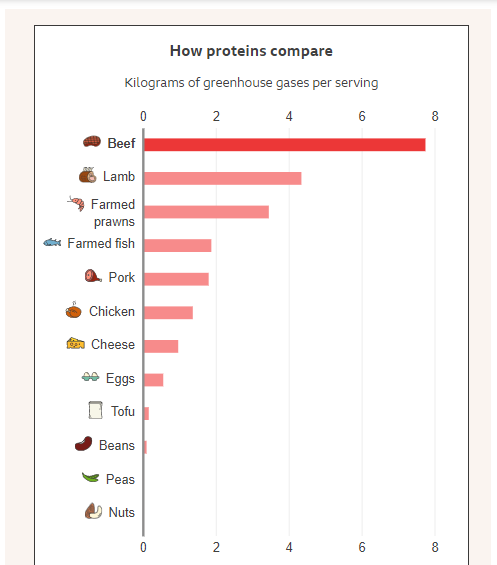
- Beef’s carbon footprint is four times the footprint of chicken and 10 to 100 times the footprint of most plant-based foods. Even small changes could make a massive difference here!
- It is important to vary your diet, so consider eating a balance of chicken, fish (both much lower in saturated fats than beef), eggs, grains, beans or nuts – which have the lowest carbon footprint of all protein sources.
Try a plant-based diet: Quitting meat isn’t just about animal cruelty any more, it’s about making one small sacrifice to preserve our planet for future generations.
- If you want to move to a vegetarian or vegan diet, ask a nutritionist or doctor about the best plan for you. Lots of nutritionists publish blogs or cookbooks with useful info.
- Vegan or vegetarian cafes and cooking classes are great resources to learn more about good plant-based nutrition, and potentially meet some like-minded people in your area.
Talking to your family: Let’s be realistic: especially in agricultural countries like Ireland, a lot of people instantly recoil at the thought of giving up meat. For young people living and sharing groceries with family, it can be hard to make your parents understand your decision.
- Always be positive. Try to share the interesting things you have learned and explain that you want your family to benefit too. Discuss why you are concerned and how you think reducing meat consumption is better for the whole planet. Don’t criticize or insult people – this isn’t how you’ll win them over, and makes them even more convinced that you’re irrational!
- Be patient. Understand it may take a while for them to understand. Let’s be honest, tofu and nuts haven’t had the same advertising exposure as burgers and steak, and your parents may not be as aware of carbon footprint issues as you are.
- Lead the change. To bring them around, why not offer to cook meals for the whole family, using chicken, fish, tofu, or whatever else you are substituting for beef? Food is the way to anyone’s heart, and a great way to show them exactly what you mean. BBC Good Food, Pinterest, and Google are all great places to start looking for delicious vegetarian or other beef-substitute recipes. You might find your favorite beef recipes can also be done with chicken or tofu, and there is a whole world of amazing vegetarian food, from Vietnamese to Indian and beyond.
Make sure you get enough protein. If you chose to eat less meat, or become vegetarian or vegan, the first question you’ll be likely to hear is “how do you get enough protein?”. Understanding nutrition and making healthy choices is extremely important for everyone (think of it this way – being vegan is surely healthier than living off fast food burgers, even though those have a lot of protein!).
- Focus on getting the right amounts of proteins, and vitamins. Most people need around 0.8g of protein per day per kg (for example, if you weigh 65kg, you would need 52g of protein per day), but this can vary on your activity level.
- Remember – too much protein isn’t good either. Nutritionists recommend we eat maximum 3.5 servings of meat per week. However, a steak filet has so much protein that it’s equivalent to 3.5 servings all by itself. (source) Many people eat too much, which can lead to minor symptoms such as tiredness or headaches, but also more serious things like type 2 diabetes, cancer, cardiovascular diseases, and seizures! (source)
- Space out your proteins. Protein is most effective when absorbed gradually throughout the day. This is why it is good to “space out” your protein servings, for example, nuts and yoghurt at breakfast, chicken sandwich at lunch, and a tofu dish for dinner. Eating a steak is actually less efficient, as protein works best when absorbed slowly in the body. (source)
- Make conscious choices. Think about where your food comes from – was it grown locally, or flown halfway around the world by a polluting jet? Is it fair trade? Are the ingredients providing all the vitamins you need, or just a sugar hit? Make healthy choices and take more interest in the ingredients in your food. Not only will you reduce your carbon footprint, you will likely feel much healthier.
Leave a Reply